Augmented reality has been talked about in live events for years. The reality has been inconsistent.
At its best, AR creates moments fans remember and share long after the event ends. At its worst, it feels like a novelty that people try once and ignore.
After deploying AR across major sports and entertainment events, some clear patterns start to emerge. Certain approaches consistently work. Others fall short.
What Works
1. No Download Required
The biggest barrier to AR in live environments is still the same: app downloads.
Expecting thousands of fans to install an app at the same time, on the same network, is unrealistic. Even if they try, the experience is slow and unreliable.
Web-based AR solves this. A simple scan opens the experience instantly in a browser. No install, no setup, no delay.
Using tools like Snap's Camera Kit, it is now possible to deliver high-quality AR through the web that feels comparable to native apps, without the friction.
2. Tied to the Moment
AR only works when it feels relevant.
A simple example. A team-themed filter makes sense during a final. The same filter at an unrelated event feels out of place. Context matters.
The strongest experiences are built around the specific event and what is happening in real time. This is where things start to get interesting.
AR that reacts to live moments is where the real potential sits. Filters that change when a goal is scored. Visuals that respond to a record being broken. When AR connects directly to the action, it feels part of the event rather than an add-on.
3. Built to Be Shared
The real test of any AR experience is simple. Do people share it?
It does not matter how good something looks if it stays on the user's phone. The value comes when fans send it to friends or post it online.
When designing AR, the question should always be whether someone would actually want to share the result. If the answer is uncertain, the concept needs work.
The most effective experiences produce content that feels personal, fun, and worth showing to others. That is what extends the event beyond the venue.
4. Designed for the Crowd
Most AR is built for individuals. That is only part of the opportunity.
The real impact comes when AR is used at scale. When large groups of fans are interacting at the same time, it turns into something much bigger.
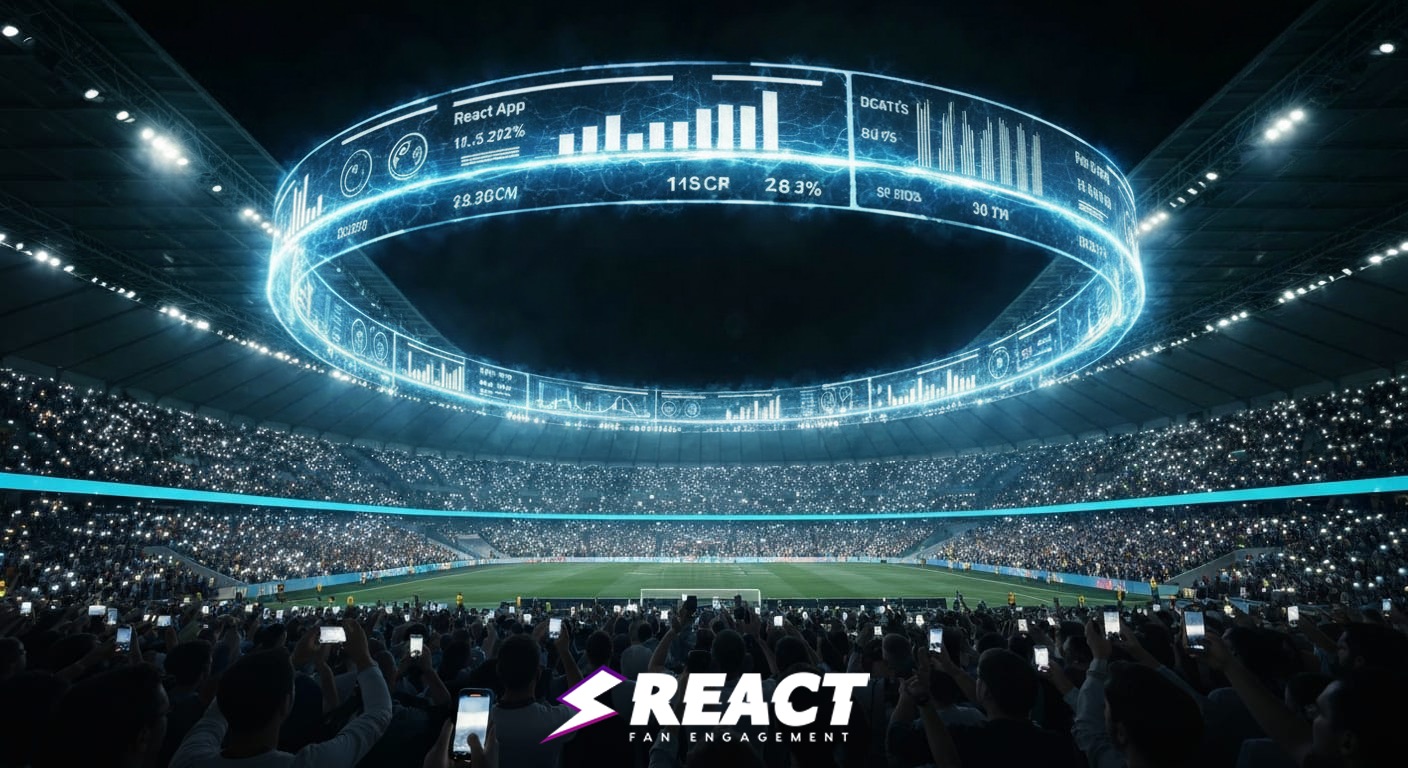
Coordinated visuals across sections of a stadium. Thousands of phones displaying national colours in sync. These moments create a sense of collective participation and generate content that travels far beyond the event itself.
What Doesn't Work
Relying on Perfect Conditions
Live events are unpredictable environments.
Lighting changes constantly. Outdoor venues bring glare and shadows. Backgrounds are busy and crowded. Network conditions are never perfect.
Experiences that look flawless in a controlled demo often struggle in reality. AR needs to be built for these conditions from the start.
Testing in real venues is essential. If it only works in ideal scenarios, it will not hold up during an event.
Ignoring What's Happening Live
AR should support the event, not distract from it.
If fans are asked to focus on their phones while something important is happening in front of them, they will disengage quickly.
Timing is critical. The best moments for AR are natural breaks. Before the event starts, during half-time, or after key moments. It should fit into the flow, not interrupt it.
No Clear Purpose
Adding AR for the sake of it rarely works.
Every experience needs a clear role. What is the fan meant to feel? What do they do with it? What is the outcome for the organiser?
Without that clarity, AR becomes a short-lived demo. It might get attention briefly, but it will not leave a lasting impression.
The React Approach
Every AR experience starts with the fan, not the technology.
The thinking begins with the end result. What would someone want to capture and share from this moment? Once that is clear, the experience is built to deliver it.
The tools make it possible. The real goal is the reaction.
Curious what AR could look like at your event? Start a conversation with the React team.